
There is something truly magical about sugar gliders.
Maybe it’s those enormous, curious eyes. Maybe it’s their tiny little hands, the way they peek out of their sleeping pouches, or the incredible sight of watching one glide through the air.
Or maybe it’s the moment a once-nervous little creature begins to recognize your voice, trust your presence, and willingly climb into your hands.
Whatever it is, sugar gliders have a way of capturing your heart.
But behind those adorable faces are intelligent, sensitive, highly social animals with very specific needs. Loving a sugar glider is about so much more than cuddles and cute photographs. It’s about understanding an extraordinary animal and making a commitment to its well-being.
Today, I want to share what makes these little creatures so special, why caring for them can be incredibly rewarding, and what responsible ownership actually involves.
🌙 Meet the Sugar Glider: A Tiny Wonder of Nature
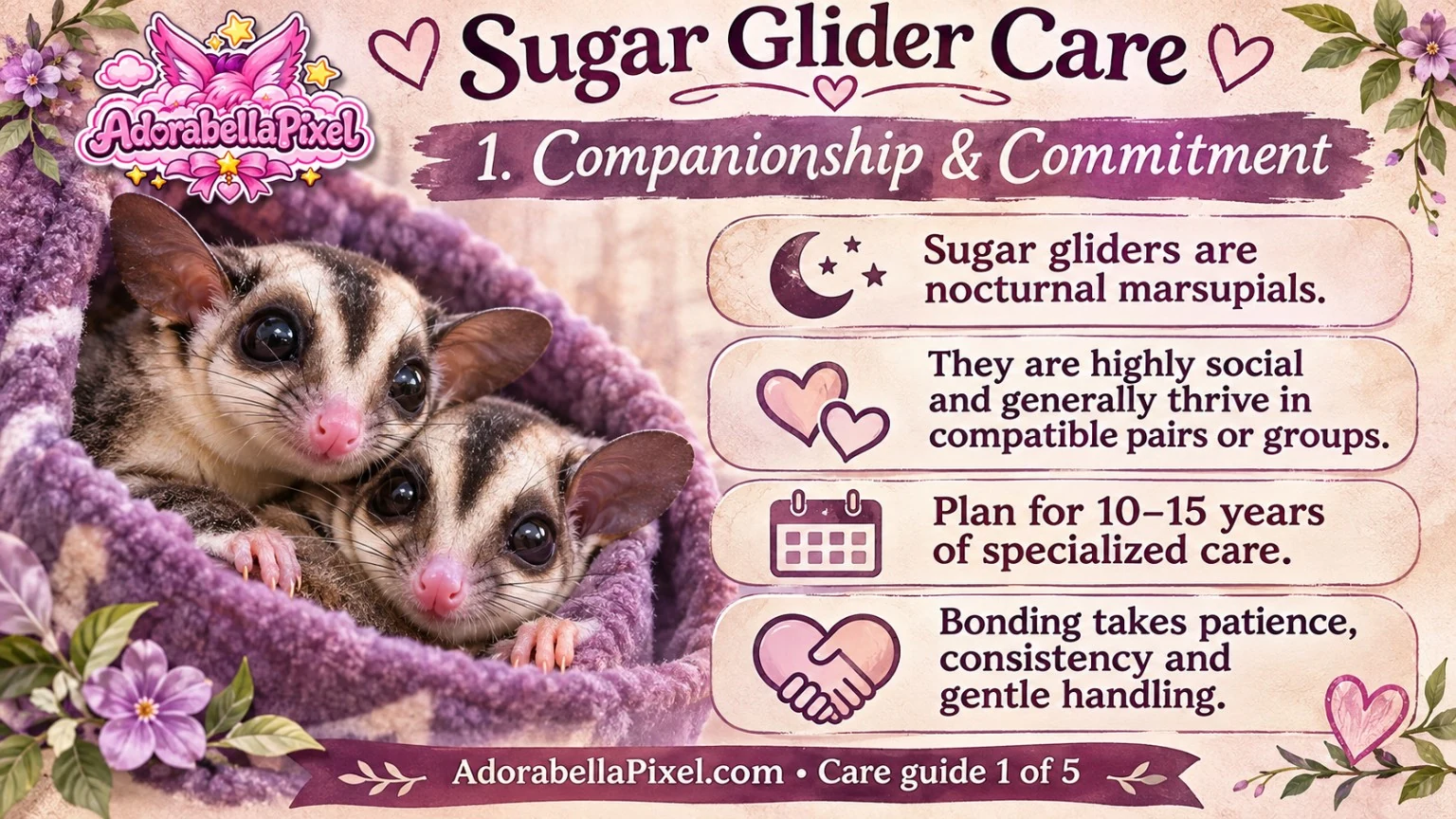
Sugar gliders are small, nocturnal marsupials, meaning females carry and nurture their young in a pouch. Although they resemble tiny flying squirrels, they aren’t rodents. They belong to an entirely different group of mammals.
Their scientific name is commonly listed as Petaurus breviceps. One of their most fascinating features is the patagium, a thin membrane of skin stretching between their front and back limbs. When they leap, this membrane spreads, allowing them to glide between elevated surfaces.
And while that ability is impressive, their personalities are just as fascinating. Sugar gliders communicate through a variety of sounds, including barking, crabbing, and softer social vocalizations. They explore with curiosity, interact with colony members, groom one another, and spend much of their waking hours climbing and searching for food.
Unlike humans, their days begin when ours are winding down. As nocturnal animals, they generally sleep during daylight hours and become active in the evening and throughout the night.
💕 Why Having Sugar Gliders Can Be So Rewarding
One of the things I find most beautiful about sugar gliders is the relationship that can develop between them and their caregivers. A sugar glider may need considerable time before feeling comfortable with someone new.
You cannot simply demand its trust. You have to earn it. And that makes the little milestones meaningful.
The first time one accepts a treat from your hand. The first time it approaches you without hesitation. The first time it voluntarily climbs onto you during playtime. Or the moment it seems completely relaxed in your presence.
These are the experiences that make the effort worthwhile.
Every Sugar Glider Has Its Own Personality
Some sugar gliders are adventurous and curious. Others are cautious, observant, or easily startled. Some enjoy exploring everything around them, while others prefer familiar spaces and routines.
Learning their personalities is part of the experience. It also teaches us something important: building a relationship with an animal means respecting who that animal is, rather than expecting it to behave exactly how we want.
The Pet Glider’s bonding guidance emphasizes patience, consistency, and allowing gliders to become comfortable at their own pace. A strong bond is possible, but it should never be forced.
🐾 1. Companionship: Sugar Gliders Need Their Own Kind
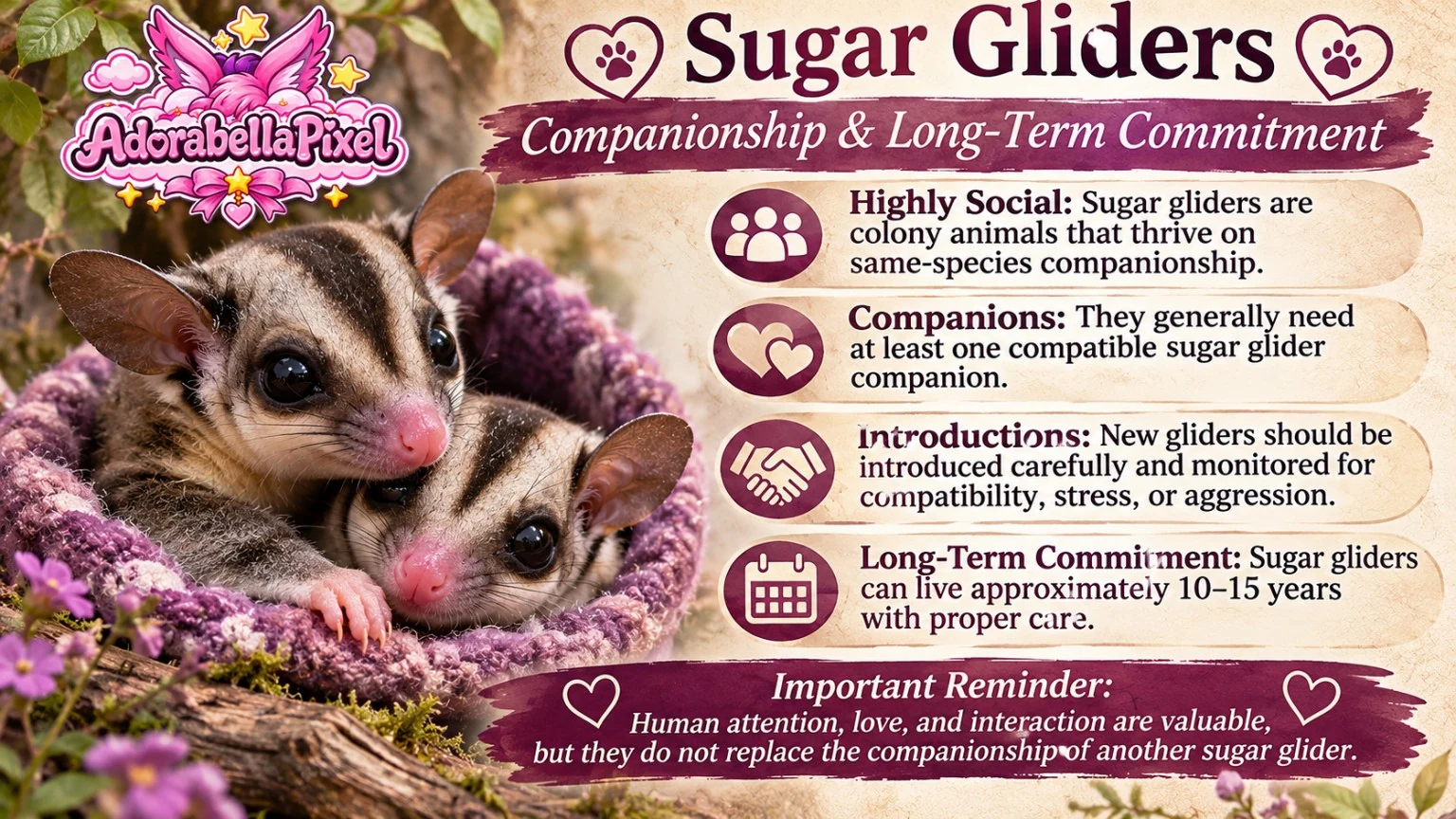
This is one of the most important things every prospective sugar glider owner needs to understand. Sugar gliders are colony animals. In the wild, they live in social groups, communicating, grooming, nesting, and interacting with one another.
Because of this, sugar gliders should generally be housed in compatible pairs or appropriately managed groups. Human attention cannot fully replace the companionship of another sugar glider. Their social relationships allow them to participate in natural behaviors that are essential to their welfare.
Before bringing sugar gliders home:
- Plan for at least two compatible gliders.
- Introduce unfamiliar animals carefully rather than immediately placing them together. Ask your vet about quarantine and health checks before introductions.
- Monitor their relationships for fighting, stress, or bullying.
- Discuss reproductive management and neutering with an experienced exotic veterinarian.
- Provide enough sleeping spaces, food access, and enrichment for everyone.
Not every introduction is successful, and some animals require separate housing during introductions or after conflicts. The goal isn’t simply to have multiple gliders. It’s to create a safe, compatible social group.
🏡 2. Housing: Give Them Room to Be Sugar Gliders
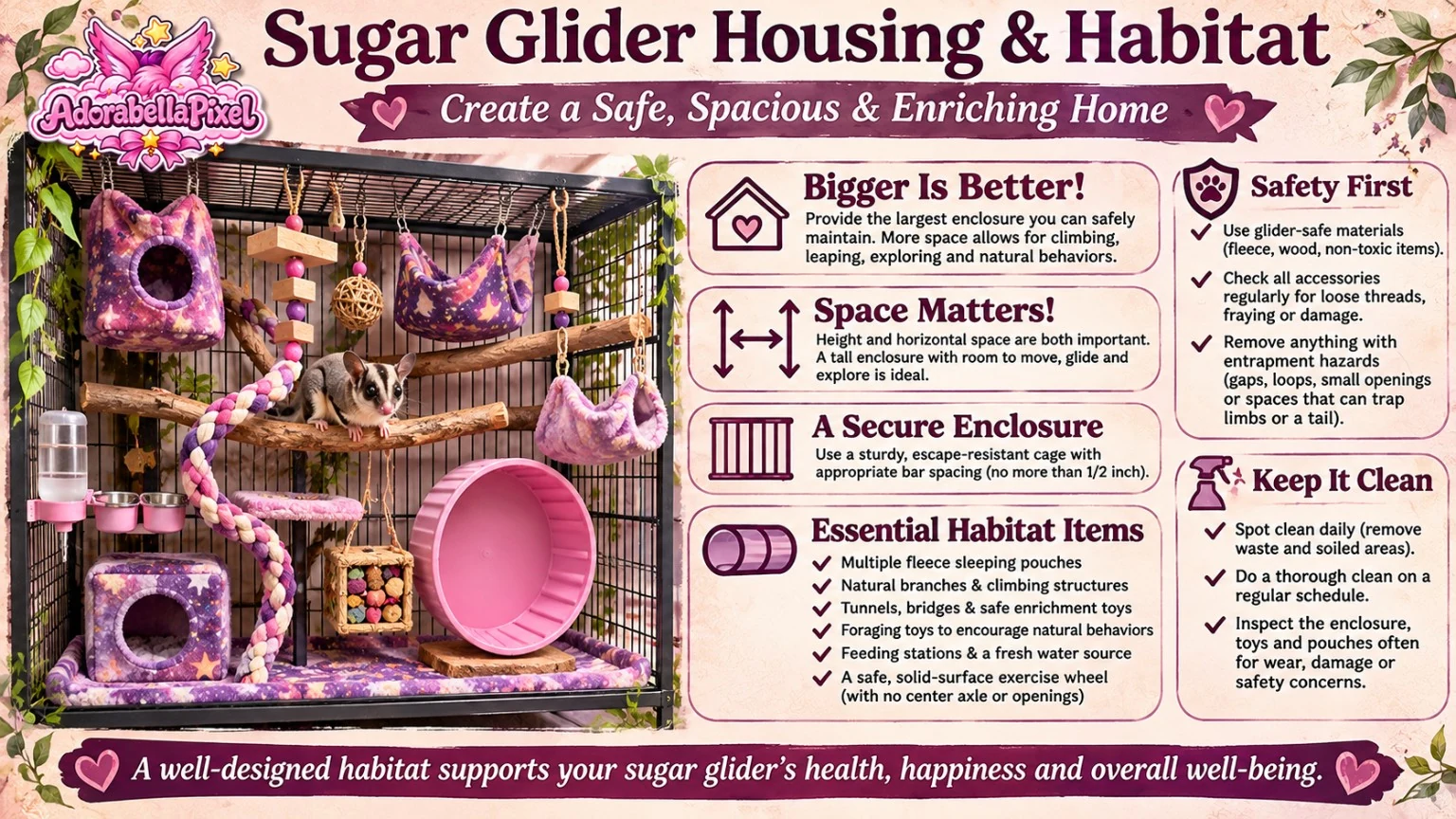
A sugar glider’s enclosure is not just somewhere to sleep. It’s where they climb, leap, explore, forage, interact, and spend a significant portion of their lives. And that means size matters.
Bigger Is Better!
A tall, spacious enclosure is essential, but height alone isn’t enough. Gliders also need horizontal room to move and leap. Choose a secure, escape-resistant cage specifically appropriate for sugar gliders, with safe bar spacing and suitable materials.
The Merck Veterinary Manual lists a minimum enclosure of approximately 36 inches wide × 24 inches deep × 36 inches high, with bar spacing no greater than half an inch. Published recommendations differ; Chewy’s care sheet recommends a larger 24 × 36 × 48-inch enclosure for up to two. Treat minimums as starting points and provide the largest practical enclosure you can safely maintain.
What Belongs Inside?
- Multiple secure, glider-safe sleeping pouches.
- Appropriate branches and climbing structures.
- Safe tunnels, bridges, and enrichment toys.
- Opportunities to forage and explore.
- Secure feeding and watering stations.
- An appropriately designed exercise wheel.
- Different levels and routes for climbing and jumping.
Inspect fleece products for loose threads, damaged seams, or anything that could catch tiny nails. Avoid unsafe wire surfaces, exposed sharp edges, toxic materials, and accessories that could trap limbs or tails. A material described simply as “wood” or “fleece” still needs assessment for its construction and condition.
A Word About Exercise Wheels
Not every wheel marketed for small animals is suitable for sugar gliders. Traditional hamster wheels and designs with center axles, unsafe openings, or trapping hazards can cause serious injuries.
Two models commonly discussed within sugar glider-keeping communities are the Raptor and Free Runner. However, product safety should be assessed by the wheel’s current design and condition rather than relying on a brand name alone. Ask a knowledgeable exotic veterinarian or experienced glider rescue about suitable equipment.
Never assume a wheel is safe just because it is advertised for exotic pets.
🍎 3. Nutrition: Their Health Begins With the Right Diet

Sugar gliders have specialized nutritional requirements. In their natural environment, they consume a varied diet that may include insects, nectar, pollen, sap, gums, and other available foods. Their nutritional needs cannot be met by simply placing a bowl of fruit in their cage.
A diet consisting primarily of fruit, sugary treats, or an unbalanced assortment of foods can lead to serious health problems.
Choosing a Balanced Diet Plan
Some established captive-feeding approaches include:
- BML (Bourbon’s Modified Leadbeater’s): a structured feeding plan that combines a prepared staple mixture with specified accompaniments.
- TPG (The Pet Glider Diet): a feeding approach that uses a particular mixture and supplement protocol.
- HPW-style diets: feeding systems using specialized protein-based staple preparations, with accompanying foods determined by the particular recipe.
These diets are not interchangeable. Each has its own ingredients, preparation methods, serving instructions, and supplementation requirements. Do not combine pieces of different feeding plans or add extra calcium and vitamins without professional guidance. If a selected plan requires a supplement, discuss that exact protocol with your veterinarian rather than omitting it or adding more on your own.
Commercially prepared diets also vary considerably in their formulations. The best approach is to work with an exotic veterinarian familiar with sugar glider nutrition to select an appropriate, complete feeding plan. Merck notes that no single diet has been proved ideal, so “commonly used” does not mean every recipe or product is equally suitable.
What About Fruits and Vegetables?
Depending on the selected feeding plan, suitable foods may include certain berries, apples without seeds, papaya, mango, leafy greens, and other approved produce. However, not every fruit or vegetable should be offered freely or in the same proportions. A food that fits one feeding plan may not fit another.
Foods to Avoid
Never offer chocolate, caffeine, alcohol, onions, garlic, spoiled foods, or heavily salted and processed human foods. Always wash produce thoroughly, follow the chosen diet’s instructions, and provide fresh drinking water.
Since sugar gliders are nocturnal, their main feeding schedule generally aligns with evening activity. Remember: a balanced diet is not simply about variety. It’s about providing the correct nutrients in the correct proportions.
💜 4. Bonding: The Beauty of Earning Their Trust
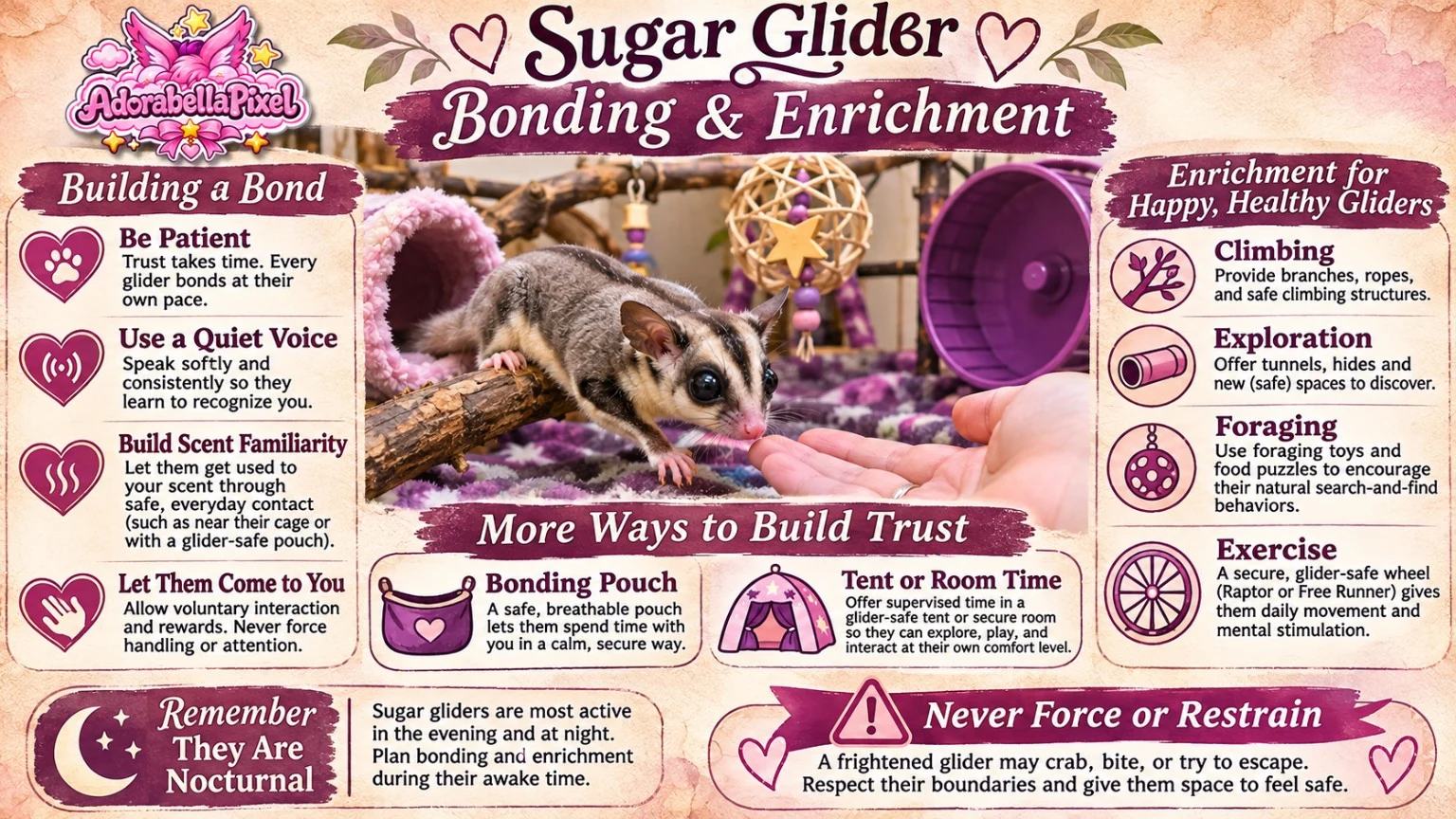
Bonding is one of the most rewarding aspects of sugar glider care. But it can also be one of the most misunderstood. A sugar glider is a small prey animal. A new home can be overwhelming. Unfamiliar sounds, smells, movements, and people may initially feel threatening.
Some gliders will crab, hide, retreat, or attempt to bite when frightened. These behaviors do not mean the animal is bad or incapable of bonding. They are forms of communication.
How to Begin Bonding
- Allow time to settle. The Pet Glider recommends allowing approximately three to four days for newly arrived gliders to acclimate. Avoid unnecessary handling while they adjust; some need longer.
- Let them become familiar with you. Speak softly near their enclosure. Allow them to recognize your voice and scent. A small, safely prepared scent item may help, provided it cannot entangle them or introduce unsafe materials.
- Offer positive interactions. Once they appear comfortable, offer an approved treat without forcing contact. Let them approach voluntarily.
- Use a safe bonding pouch. A properly designed, breathable bonding pouch can allow a comfortable glider to spend quiet time near you. Never force a frightened glider into a pouch or repeatedly disturb its sleep.
- Try supervised tent time. A secure play tent or fully glider-proofed room provides an opportunity for your gliders to explore while you sit quietly nearby. Allow them to choose when to approach, climb, or interact.
What If Bonding Takes Months?
That’s okay. There is no universal bonding deadline. Some gliders become comfortable relatively quickly, while others need substantially longer. Some may never enjoy being held, even when they feel secure with their caregiver.
Trust is not measured by how long you can hold an animal. It’s measured by how safe that animal feels around you.
🌿 5. Enrichment: Keep Their Minds and Bodies Active
Sugar gliders are intelligent, active animals. They need opportunities to climb, investigate, forage, and make choices about their environment. Without appropriate stimulation, captive animals may experience boredom and stress.
Enrichment Ideas
- Foraging toys that encourage natural food-searching behaviors.
- Rotating climbing structures and approved toys.
- Supervised exploration in a secure area.
- Appropriate glider-safe exercise equipment.
- Food puzzles and carefully measured treats.
- Multiple climbing routes and elevated resting areas.
Change activities gradually and monitor how your gliders respond. Not every animal enjoys the same toys or experiences.
Safety Comes First
Before allowing out-of-cage play, secure doors and windows, turn off fans, remove hazardous objects, cover open water, and block dangerous gaps. Keep cats, dogs, and other household animals completely separated during playtime.
Never use harnesses, collars, or leashes on sugar gliders. Their delicate gliding membranes can be injured by restrictive equipment. Ordinary bird toys are not automatically safe for gliders. Every item needs to be checked for material, construction, and entanglement risks.
🩺 6. Health Care: Small Animals, Big Responsibilities
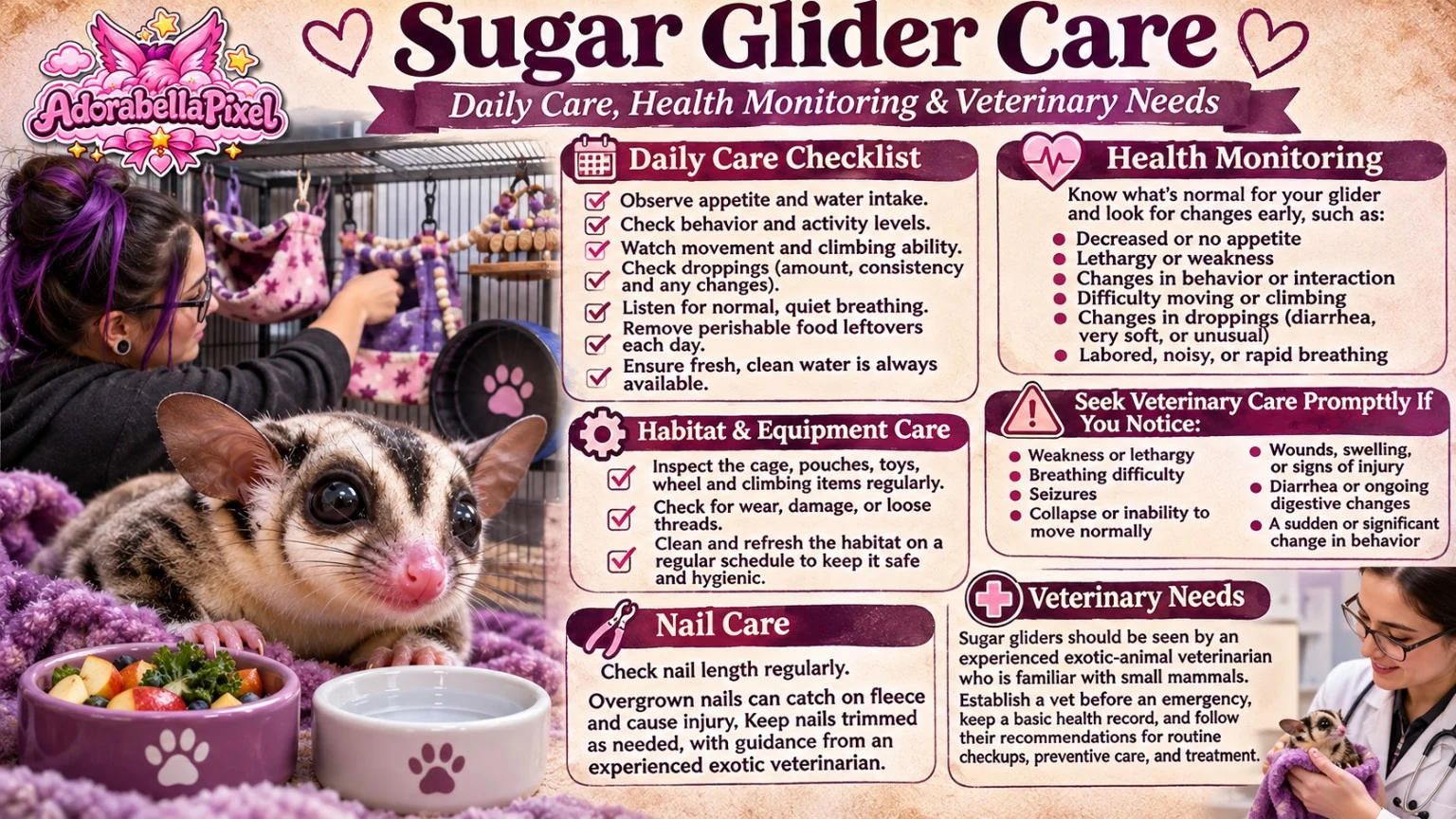
Sugar gliders need veterinary care from someone experienced with exotic mammals. Before acquiring them, locate an appropriate veterinarian and establish an emergency-care plan. Do not wait until an animal becomes ill to begin searching for medical care.
Routine veterinary visits provide opportunities to assess nutrition, body condition, dental health, skin and fur, mobility, and other aspects of wellness.
Warning Signs That Need Attention
Contact an exotic veterinarian promptly if you notice:
- A significant change in appetite or drinking.
- Unusual weakness or difficulty climbing.
- Sudden behavioral changes.
- Abnormal breathing.
- Diarrhea or other concerning changes in droppings.
- Hair loss, wounds, swelling, or excessive scratching.
- Limping, tremors, or abnormal movement.
- Persistent self-injury or overgrooming.
Sudden weakness, breathing difficulty, seizures, collapse, or inability to move normally warrant emergency veterinary attention.
Nail Care and Grooming
Sugar gliders typically groom themselves and do not require routine bathing. Their nails, however, need regular monitoring. Overgrown nails may catch in fleece or interfere with climbing. Ask an experienced veterinarian to demonstrate safe nail-trimming techniques before attempting this yourself.
Avoid unnecessary bathing or applying grooming products intended for cats, dogs, or humans.
📅 7. A Simple Sugar Glider Care Routine
Consistency makes a difference. A predictable routine can help you notice changes and keep essential care tasks from being overlooked.
Every Day
- Provide the appropriate evening meal.
- Check and refresh drinking water.
- Remove leftover perishable food.
- Spot-clean soiled areas.
- Observe each glider’s behavior, appetite, and movement.
- Inspect pouches and toys for immediate hazards.
- Provide appropriate enrichment and positive interaction.
- Allow uninterrupted daytime rest.
Every Week
- Clean cage accessories as needed.
- Inspect climbing structures and exercise equipment.
- Rotate safe enrichment items.
- Review food preparation and supplies.
- Check fleece items for wear and loose threads.
Regularly and as Needed
- Monitor weight and body condition.
- Check nail length.
- Attend scheduled veterinary visits.
- Review diet and nutritional needs.
- Maintain an emergency-care fund and supplies.
- Reassess habitat safety and social compatibility.
Cleaning schedules should be adjusted to the enclosure and number of animals. Maintain hygiene without unnecessarily removing every familiar scent at once.
🌸 8. Are Sugar Gliders Right for Everyone?
No, and that is perfectly okay. As much as I love these animals, I believe it’s important to be realistic about their needs. Sugar gliders are not low-maintenance pets.
They require specialized food, appropriate housing, social companionship, enrichment, veterinary care, and consistent attention. They may be noisy at night. They may mark their territory. They can be messy. They may bite when frightened. And bonding does not happen on a guaranteed schedule.
They also represent a substantial long-term commitment. Plan for the possibility of approximately 10–15 years of specialized care, while remembering that an individual animal’s lifespan varies.
Before bringing sugar gliders into your family, ask yourself:
- Can I provide appropriate care for more than one glider?
- Am I prepared for their nocturnal lifestyle?
- Can I afford specialized food, supplies, and veterinary care?
- Do I have time for enrichment, cleaning, and patient bonding?
- Am I ready to care for them for the next decade or longer?
If the answers are yes, sugar gliders may be a wonderful addition to a carefully prepared home. Check the rules where you live before acquiring them. If the timing or circumstances aren’t right, appreciating these animals from a distance is also a responsible and loving choice.
💕 A Little Animal With an Extraordinary Place in Your Heart
What makes sugar gliders special isn’t simply how adorable they are. It’s how much there is to learn about them. Their natural behaviors. Their social relationships. Their intelligence. Their unique ways of communicating. And the trust that can slowly develop when we give them the patience and respect they deserve.
For me, the joy of caring for animals comes from learning what makes each one unique and finding ways to help them feel safe, healthy, and loved.
Sugar gliders remind us that affection is only one part of responsible pet ownership. Real love also means researching their needs, making thoughtful decisions, recognizing their boundaries, and continuing to learn.
Because these tiny creatures depend on us for so much. And when we provide the care they deserve, the experience can be truly extraordinary.
Tiny paws. Big personalities. A lifetime of responsibility. And a whole lot of love. 💜
With love and a little glider magic,
AdorabellaPixel
adorabellapixel.com
📚 References & Further Reading
- Merck Veterinary Manual: Overview of Sugar Gliders — veterinary guidance on biology, housing, nutrition, and care.
- The Pet Glider: Basic Q&A’s on Glider Info & Care.
- The Pet Glider’s Tips & Tricks for Bonding.
- Chewy: Sugar Glider Care Sheet.
- iNaturalist: Sugar Gliders (Petaurus breviceps).